
Keep more of every sale with a pricing model designed to offset eligible card-processing costs. Give customers a clearly disclosed cash price and card price, while shifting eligible card-acceptance costs away from your operating margin.
Shift eligible card-acceptance costs out of your margin instead of absorbing them.
Show customers their payment options before they choose how to pay.
Help with equipment, pricing configuration, disclosures, signage and rollout.
Dual pricing should fit the business, not force the business to fit the program.
Years in Complex Payments Processing
US-Based Support
Avg. Approval Time
Merchant Relationships Established
Same item, two prices
Cash Price
$100
Card Price
$104
Dual pricing is a payment-pricing model where customers can see two prices for the same product or service: a cash price and a card price. The customer sees those options before payment and chooses which price applies by choosing how they want to pay.
If the customer chooses cash, they pay the cash price. If they choose an eligible card payment, they pay the disclosed card price. That difference can help the business offset some or potentially most of the eligible cost of accepting card payments, depending on the merchant’s program and transaction mix.
The important part is not simply the pricing difference. It is that customers understand their options before they pay.
The customer should be able to understand the available pricing before committing to the purchase.
Menus
Signage
Displays
Price lists
Invoices
The customer decides how they would like to pay based on the clearly disclosed options. Dual pricing works best when that choice feels intentional rather than like a surprise fee at the end of checkout.
The configured terminal or point-of-sale environment applies the appropriate transaction price based on the supported payment method and program setup.
When implemented appropriately, dual pricing can allow the business to recover eligible card-acceptance costs instead of absorbing all of them within its operating margin.
Processing fees are part of the cost of accepting cards.
As transaction volume grows, so does that expense.
Dual pricing can shift eligible card-acceptance costs into the disclosed card price rather than requiring the business to absorb the full amount.
For a business processing significant monthly card volume, that can create meaningful savings.
But USA Payments does not believe “lowest possible processing cost” should automatically determine your pricing strategy.
Customer behavior still matters.
Customers are generally more likely to react negatively when they feel a fee appeared unexpectedly.
Dual pricing is designed around showing the available prices before the payment decision.
That transparency matters.
A pricing strategy that saves money but damages customer trust is not automatically a good strategy.
Dual pricing does not require the customer to pay one specific way.
Instead, they can evaluate the available payment options and choose the one that works for them.
For some businesses, that can also encourage greater cash usage.
Processing costs may look small on an individual transaction.
Across hundreds or thousands of transactions, they become a significant operating expense.
Dual pricing can help businesses retain more of their existing revenue without requiring payment processing costs to sit entirely inside the merchant’s margin.
Saving on processing means very little if the pricing model creates friction with the people paying you. A restaurant, MedSpa, nonprofit and luxury retailer can all have very different customer expectations.
Everyday purchase
Cash $100 · Card $104
+$4
High-ticket service
Cash $5,000 · Card $5,200
+$200
That does not make dual pricing wrong for high-ticket businesses. It makes it a decision that involves more than processing costs.
We look at:
Then we determine whether dual pricing actually improves the business.
The best pricing model is not the one that saves the most on paper. It is the one your business can operate successfully.

MedSpas process everything from everyday skincare purchases to multi-thousand-dollar treatment packages, so customer experience matters. We help you weigh dual pricing against traditional processing rather than assuming clients should carry the cost.

Memberships, treatment programs, cash-pay services and higher-value transactions are common here. Dual pricing can reduce the cost the practice absorbs, but patient communication and transaction size should always come first.

Nonprofits are different. Donors may expect options to cover transaction costs, but the experience should stay clear and donor-friendly. Depending on the donation flow, dual pricing, ACH, Pay by Bank or another option may fit better.

Legal, consulting, contracting, automotive and similar businesses face higher processing costs on larger transactions. Dual pricing eases those costs, but makes the price difference more visible.

Businesses where customers already choose between cash and card at a physical checkout are natural candidates. Pricing can be displayed right at the point of sale, so the payment choice happens in the moment.
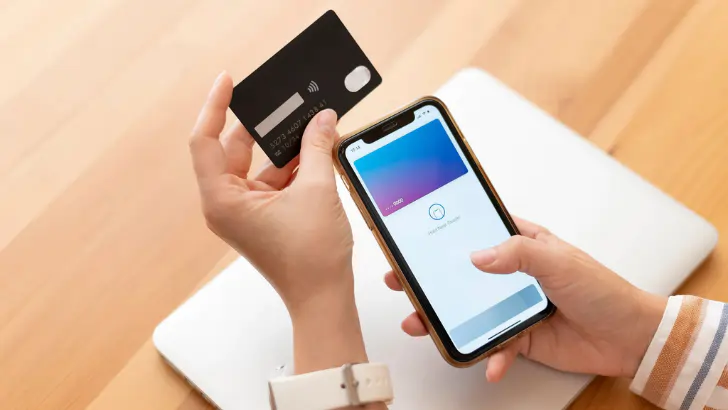
Significant card volume, tight operating margins or customers already used to cash-versus-card pricing can all point toward dual pricing. The right call depends on how your business actually sells.
Don’t see your industry? Talk to a Payment Specialist
These terms are often used interchangeably. They should not be.
| Dual Pricing | Cash Discount | Surcharge | |
|---|---|---|---|
| Basic structure | Shows cash and card prices | Customer receives a discount for paying cash | Additional fee applied to eligible card transactions |
| When customer sees pricing | Before payment | Posted pricing/discount structure should be disclosed appropriately | Fee must be disclosed under applicable rules |
| Customer choice | Chooses between displayed pricing options | Chooses whether to receive cash discount | Chooses whether to use card and incur applicable surcharge |
| Card-network rules | Depends on implementation | Discount-offer rules apply | Specific surcharge rules apply |
| Debit treatment | Depends on program structure and applicable requirements | Depends on setup | Debit surcharging is generally restricted |
| Best characteristic | Transparent pricing choice | Rewards alternative payment | Direct card-cost recovery |
Don’t see your industry? Talk to a Payment Specialist
Dual pricing may be worth exploring when your business has:
The more revenue flowing through cards, the more meaningful processing costs can become.
Businesses operating on tighter margins may benefit more from reducing the card-acceptance cost they absorb.
Savings can become substantial as transaction values rise, although customer reaction becomes more important too.
Physical checkout environments make it easier to communicate cash and card pricing clearly before the transaction.
Adoption can be easier when differentiated pricing is already common in your local market or industry.
Customers shouldn’t discover the difference at the final second. Transparency is part of every rollout.
We do not recommend dual pricing just because it can lower your processing costs.
We first want to know:
How much are you processing?
What is your average ticket?
How often do customers pay cash?
How sensitive are customers to price?
How competitive is your market?
Card-present or remote?
How will the difference look on a typical sale?
What alternatives are available?
Only then does the savings calculation become useful.
A pricing model can look fantastic on a spreadsheet and fail at checkout. We evaluate whether the likely savings justify the customer-facing change before recommending that a business adopt dual pricing.
We are not going to tell you dual pricing eliminates every processing cost, carries no compliance considerations, or is automatically right for every business. The program needs to be implemented correctly and fit your payment environment. We would rather explain those conditions before implementation than deal with surprises afterward.
Implementation can include:
Pricing configuration
Compatible equipment
Customer-facing disclosures
Signage
Receipt configuration
Staff guidance
Payment-flow review
The objective is to make the customer experience as clear as the merchant economics.
The current USA Payments program has historically been offered without requiring the merchant to remain on dual pricing indefinitely, with the ability to return to a traditional processing model.
Payment strategy should be allowed to change when the business changes.
Dual pricing allows a business to display a cash price and a card price for the same product or service.
The customer sees the available prices before payment and selects the applicable price by choosing how they want to pay.
Not exactly.
The concepts are related, but dual pricing typically emphasizes displaying both payment prices clearly before checkout.
A cash-discount program generally structures the posted price and then provides a discount when the customer uses qualifying cash payment.
The actual implementation matters more than the program label.
No.
A surcharge adds an additional charge to an eligible card transaction and is subject to specific card-brand and applicable legal requirements.
Dual pricing presents different payment prices before the transaction rather than simply adding a surcharge after one base price has been established.
Dual pricing and cash-discount structures can be permitted when implemented appropriately, but businesses should not rely on a blanket statement that any program called “dual pricing” is automatically compliant.
Pricing disclosures, transaction treatment, state law, card-brand rules, and provider requirements matter.
USA Payments helps merchants configure supported programs according to the requirements applicable to their setup.
Dual pricing can significantly reduce the amount of eligible card-processing costs a business absorbs and, in some circumstances, may offset most of those costs.
Actual results depend on transaction volume, card mix, program structure, pricing, and other account costs.
USA Payments does not recommend assuming every merchant will achieve a literal zero-cost outcome.
Some may be. Others may not care.
Customer reaction depends heavily on:
That is why USA Payments considers the customer experience before recommending the program.
It can.
However, the larger the transaction, the more visible the difference between the cash and card price becomes.
A pricing model that feels inconsequential on a $30 transaction may feel materially different on a $5,000 transaction.
High-ticket merchants should evaluate both the savings and the customer experience.
Dual pricing requires payment technology capable of supporting the chosen pricing structure.
The exact hardware or POS depends on how your business accepts payments.
USA Payments offers supported terminal and mobile-processing options and can help determine the appropriate configuration.
USA Payments’ existing program states that merchants can move back to traditional processing if they decide dual pricing is no longer right for them.
Program terms should be confirmed during setup.
Lower processing costs are valuable. Customer trust is more valuable.
Lower processing costs are valuable. Customer trust is more valuable. Dual pricing can help your business keep more of each sale by changing how card-acceptance costs are handled.
But the program only works when the economics, customer experience, equipment and pricing structure all fit the business. We will help you evaluate both sides before you make the change.